HR Excellence in Research Award for GMU Renewed by European Commission for Further Three Years
09.10.2026 | 3 min. czytania
Gdynia Maritime University has received a positive evaluation from the European Commission as part of the implementation of the HR Excellence in Research Strategy (HRS4R).
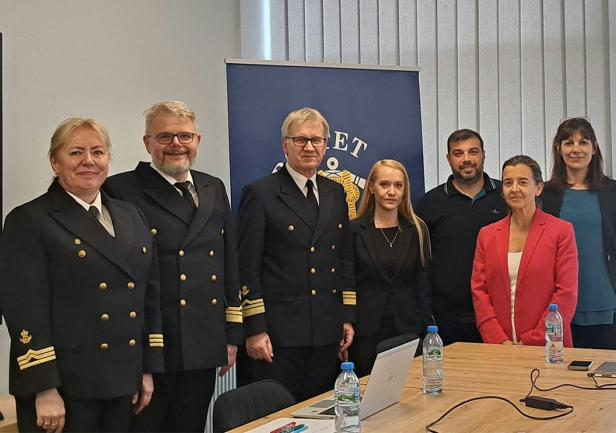
On 8 June 2026, an evaluation visit by representatives of the European Commission took place at Gdynia Maritime University within the framework of the implementation of the HR Excellence in Research Strategy (HRS4R). The meetings were attended by representatives of the University: Dr Dariusz Barbucha, Deputy Rector for Science; Dr Sambor Guze, Deputy Rector for Education and Student Affairs; Professor Tomasz Tarasiuk, Deputy Rector for Internationalisation, Cooperation and Development (currently: Deputy Rector for Enterprise and External Engagement); members of the HR Strategy Implementation Monitoring Team; and 50 representatives of academic staff and doctoral candidates. The European Commission was represented by an assessment team consisting of Achilleas Tsiligeridis (GR), Silvia Zabeo (IT), and Lorena Muñoz (ES).
The visit provided an opportunity to present the results of the multi-year implementation of the HRS4R Strategy and to discuss its significance for the development of HR policy and the researcher support system at GMU.
The European Commission positively assessed the University’s actions to date. In particular, it was emphasised that the HRS4R process has become an integral part of GMU’s strategic planning and organisational culture, establishing a structured framework for continuous improvement in human resources management and processes supporting scientific activity. Positive evaluations were given to, among others, increased transparency and consistency in recruitment procedures, the posting of vacancies on the EURAXESS platform, the development of the researcher support system, the activities of the Doctoral School and Technology Transfer Office, anti-discrimination and anti-harassment initiatives, psychological support, and competence development opportunities through participation in numerous training sessions. The Commission also highlighted GMU’s engagement in science communication, the dissemination of research results, and public engagement, identifying these activities as visible benefits resulting from the HRS4R process.
Following the visit, the University was required to submit, within two months, an updated report on the implementation of the Action Plan and to present proposals for improvement measures aimed at further enhancing the results already achieved. On 21 September this year, GMU received notification that its efforts to align with the principles of the European Charter for Researchers had been recognised, thereby granting GMU a positive evaluation resulting in the right to use the HR Excellence in Research logo for a further three years.
The visit and the outcome achieved confirmed that the implementation of the HR Strategy for Researchers at GMU represents not only the attainment of European standards for personnel policy as outlined in the European Charter for Researchers, but also an instrument for the systematic development of the University and the creation of an increasingly better working environment for researchers.
I would like to thank all members of University staff involved both in the preparation and course of the European Commission assessment team's site visit to GMU, as well as in the systematic work on monitoring the implementation of the HR Strategy at our University, emphasised Dr Dariusz Barbucha, Deputy Rector for Science.