Join us for Pomeranian Researchers' Night at GMU
09.09.2026 | 5 min. czytania
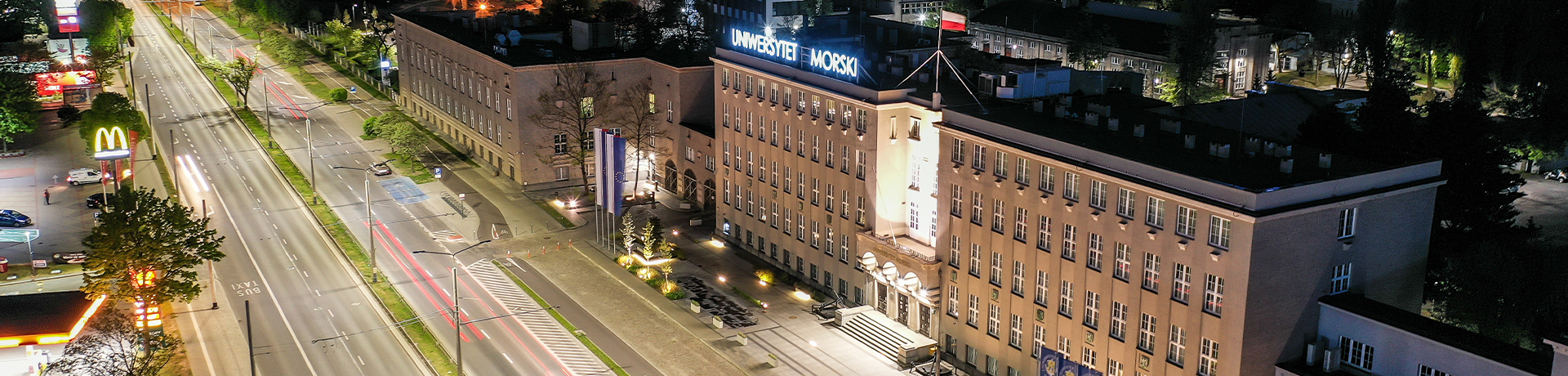
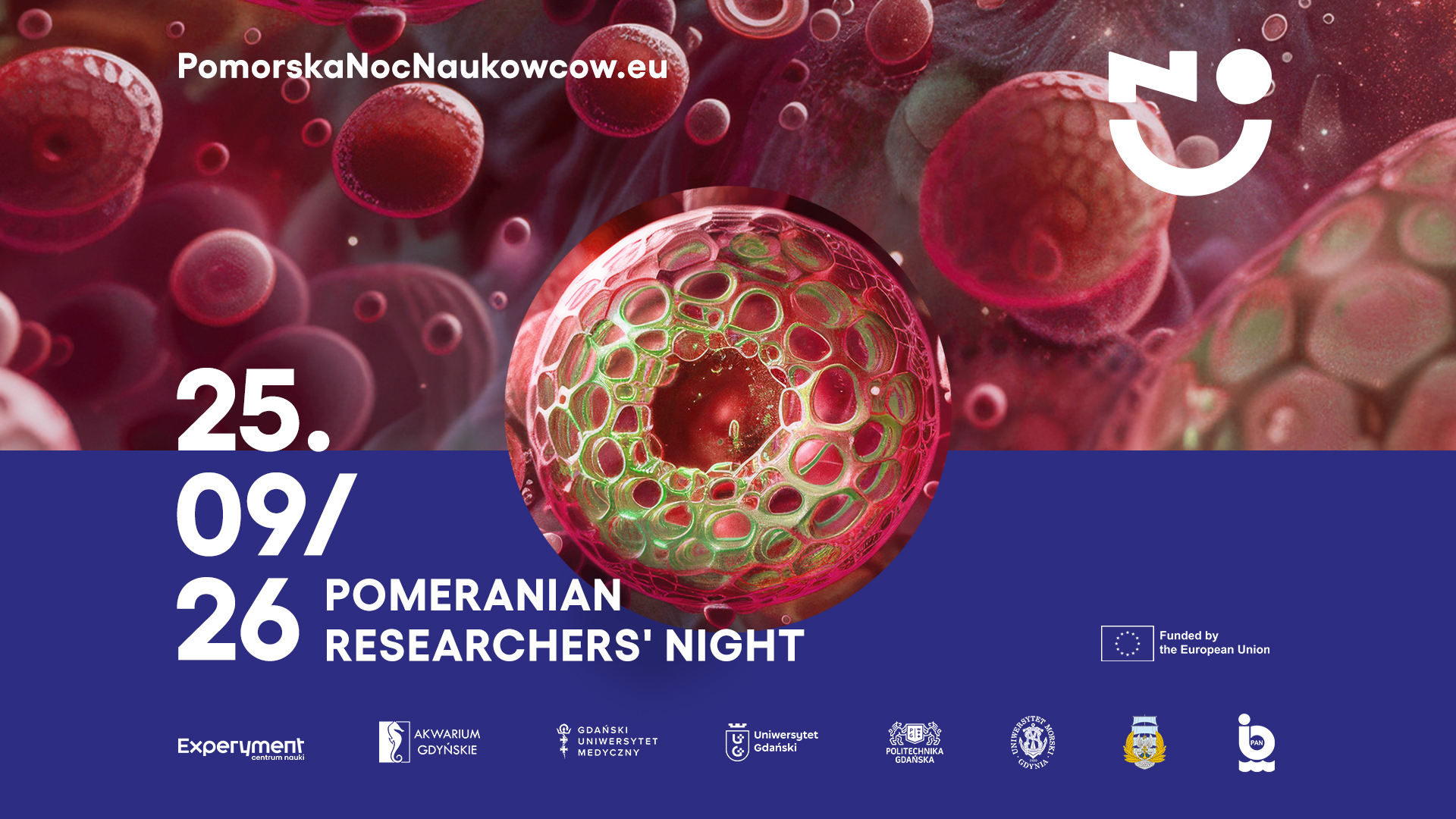
Science, new technologies, AI at sea, cybersecurity, digital twins – join us on 25 September 2026 from 18:00 to 22:00 for Pomeranian Researchers' Night 2026 at Gdynia Maritime University (GMU main building, ul. Morska).
Gdynia Maritime University once again opens its doors to anyone wishing to discover science in practice, learn about the latest technologies, and look behind the scenes of research conducted at our University.
This year’s edition features six fascinating sessions in which GMU researchers and students will take participants into the world of modern technology, cybersecurity, artificial intelligence, 3D printing, virtual reality, and navigation.
What Have We Prepared?
- Everyday Cybersecurity – Daria Żuk, PhD(Eng)
How do you recognise phishing? How do you create a strong password? What should you do when a suspicious message arrives in your inbox? And are card payments really secure?
Everyday Cybersecurity is an interactive workshop demonstrating straightforward ways to protect your security online and during everyday use of digital devices.
Participants will test their knowledge by answering questions using a wheel of fortune and specialised playing cards. The session will also introduce the operating principles of RFID protection and show why the conscious use of modern technologies is essential.
Upon completion, each participant can receive a Cyber-Aware Participant certificate.
- AI at Sea – The Dual Nature of Modern Technologies: Enemy or Ally of Safety? – Rafał Cichocki, MSc(Eng)
Can artificial intelligence seize control of a vessel?
Modern vessels and ports are complex digital systems connected to the internet. Artificial intelligence helps manage them, forecast failures, and detect cyberattacks. However, the same technology enables the generation of convincing phishing messages, malware, and automated attacks on vulnerable systems.
This lecture examines how AI is transforming maritime cybersecurity, whether it poses a threat to navigation and port infrastructure, and how an apparently harmless query to a popular chatbot can lead to leaks of confidential data.
- Which Ships Visit the Seaport of Gdynia? – Master Mariner Grzegorz Rutkowski, PhD(Eng), Associate Professor
Do you know what remarkable vessels call at the Port of Gdynia?
From small Optimist dinghies and the Gdynia Maritime University sail training ship Dar Młodzieży, to giant container ships, cruise liners, and specialised offshore units – Gdynia accommodates vessels of vastly diverse sizes, functions, and operational profiles.
During this session organised as part of the Pomeranian Researchers' Night, we will take a behind-the-scenes look – or rather, a view from the bridge – at the Port of Gdynia to examine what actually calls at our port, how large these vessels can be, and what roles they perform.
The session will feature impressive data, curiosities, the history of the port, and examples of ships illustrating the sheer diversity of the contemporary maritime world. If you want to know what truly happens beyond the breakwater, which ships arrive in Gdynia, and how vessel operations are handled – step aboard and join the lecture!
- Practical Implementation of a 3D Game in the Godot Engine – Juliusz Łosiński, MSc(Eng)
Godot is a modern, free video game engine. It includes built-in modules responsible for 2D and 3D graphics rendering, physics, and audio, among other functions. The physics engine allows users to simulate the real-world behaviour of objects and detect collisions, while the audio module enables the implementation of sound, including spatial audio effects.
This lecture will demonstrate how to build a basic 2D game using the Godot engine and explain the programming involved in individual game elements.
The lecture will last 1.5 hours and is aimed at young people interested in computers, gaming, and programming. Prior knowledge of the Godot engine is not required.
- Do I Have a Digital Twin? – Monika Rybczak, PhD(Eng)
What is a digital twin?
How does it work, and what can it be used for?
Where is it used in the real world?
Why could this technology be vital for the future?
You will find answers to all these questions by taking part in this workshop.
Discover how this technology works and how it is already transforming the way we design, test, and manage real-world physical objects and processes. Join the workshop and explore the potential of digital twins!
- The Bathychron: An Extraordinary Solution to Underwater Challenges – Master Mariner Grzegorz Rutkowski, PhD(Eng), Associate Professor
What connects human beings, the ocean depths, and rising sea levels?
The answer may be the Bathychron – a unique, flexible diving bell that enables safer human transport and underwater operations.
During this session, we will explore how this remarkable device works, the capabilities it offers, and why it could prove a compelling tool in the face of challenges brought by a changing environment and rising sea levels.
Venue
All lectures and demonstrations organised by our University will be held in the GMU main building at ul. Morska 81–87, 81–225 Gdynia. Talks are delivered in Polish.
It will be an evening full of experiments, curiosities, new technologies, and inspiring encounters with science.
To register for Pomeranian Researchers' Night, visit the website.
All workshops and lectures will be delivered in Polish.
We look forward to seeing you there!
Pomeranian Researchers' Night Organisers
The event in the Pomeranian Voivodeship is coordinated by the Medical University of Gdańsk, and its partners are Pomeranian higher education institutions – the University of Gdańsk, Gdańsk University of Technology, Gdynia Maritime University, the Polish Naval Academy, the research institute – Institute of Oceanology of the Polish Academy of Sciences, Experyment Science Centre, and Gdynia Aquarium.
Funded by the European Union.
The Research4Resilience project is funded by the European Union under the Horizon Europe programme.