R/V Imor
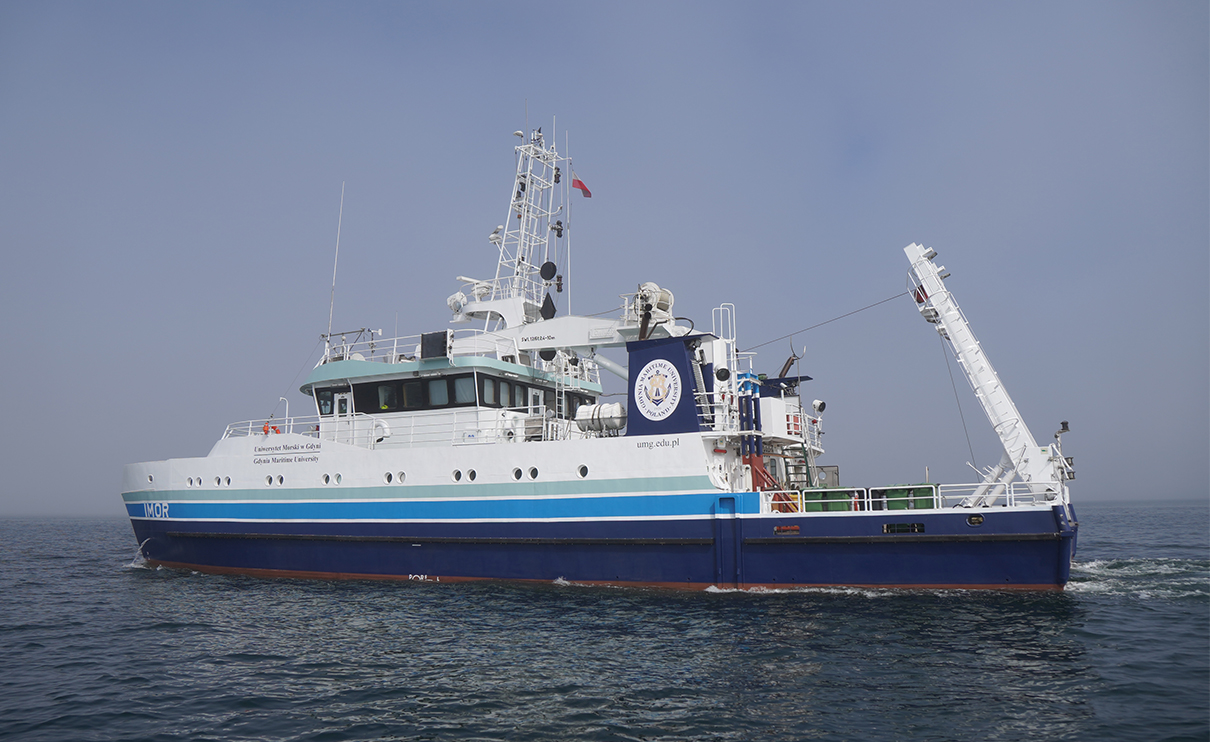
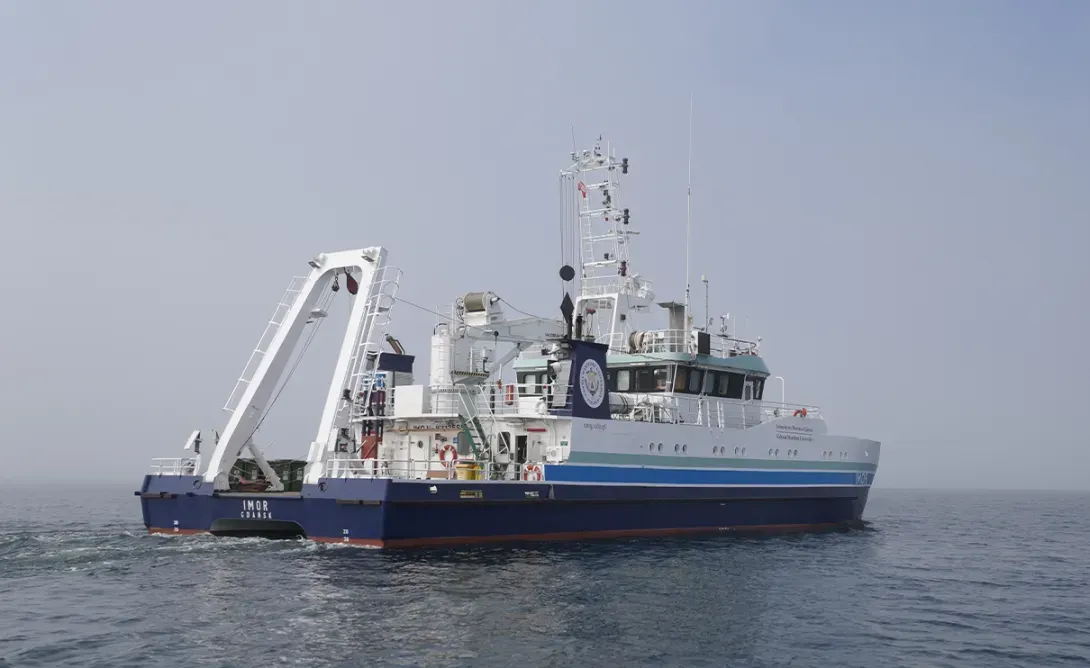
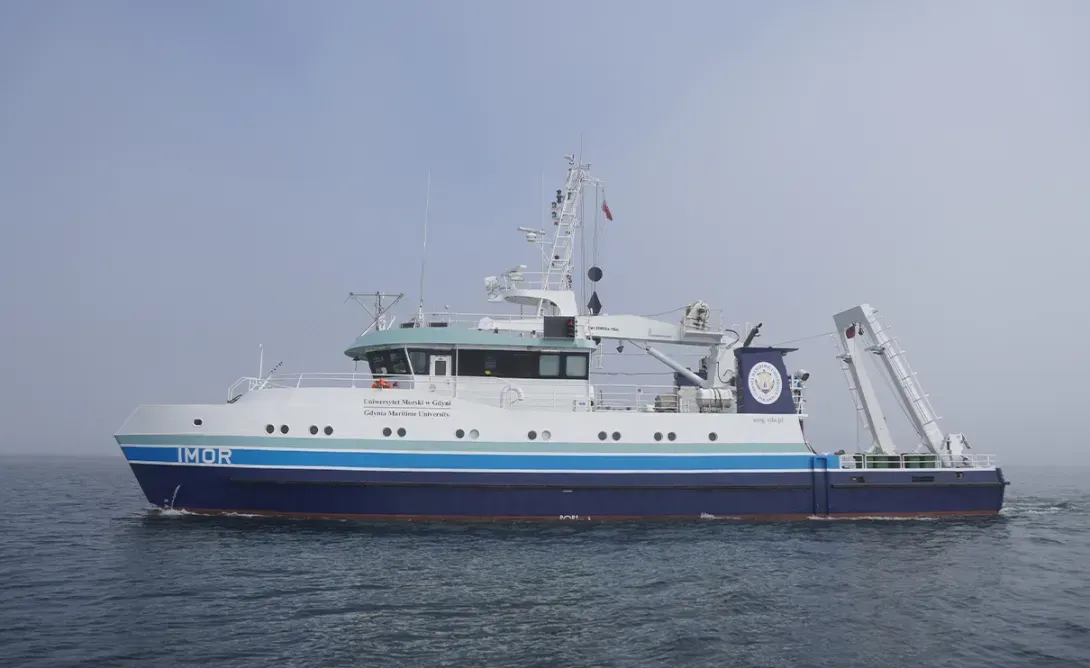
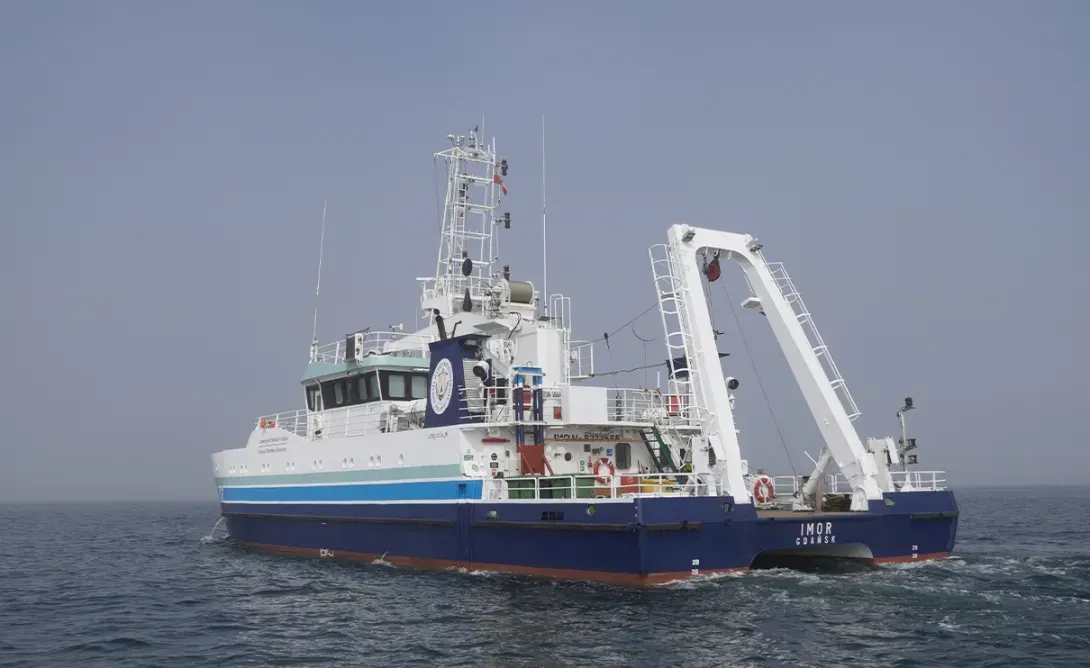
Commissioned in February 2006 as a specialised floating marine laboratory, R/V IMOR is a research catamaran operated by Gdynia Maritime University. Designed for coastal and shallow-water research, the vessel combines a relatively shallow draught with a stable twin-hull platform and highly manoeuvrable propulsion system. These characteristics make IMOR suitable for hydrographic, geophysical, oceanographic and environmental research, as well as surveys supporting offshore energy and marine infrastructure.
The vessel was co-financed by the European Union through the European Regional Development Fund. Over its operational life, IMOR has supported research and survey projects in the Baltic and has also participated in international projects, including the search for the wreckage of the Polish submarine ORP Orzeł in the North Sea.
In 2026, IMOR underwent a comprehensive shipyard refit, including work on its propulsion system, generators, lifting equipment and other vessel systems. Following the refit, the vessel successfully completed the required inspections and received renewed class certificates and a flag-state safety certificate, supporting its continued use for research and survey operations.
Core Roles and Capabilities
Sub-Sea Surveying and Marine Infrastructure Support
IMOR is equipped for hydrographic and geophysical surveys supporting offshore energy, telecommunications and maritime infrastructure projects.
- Offshore energy and cable-route surveys: Supports pre-investment surveys for offshore wind farms, submarine cable routes and pipeline corridors through seabed measurements and geophysical investigations.
- Seabed and sediment investigation: Equipment enables the collection of seabed samples from depths of up to 10 metres below the seabed in waters up to 100 metres deep.
- Dredging and resource surveys: Provides survey data for assessing dredged volumes, beach nourishment requirements and selected marine mineral resources.
- Hydrographic surveying: Hydrographic equipment supports detailed measurement and mapping of the seabed and coastal environment.
Environmental and Oceanographic Research
The vessel provides a platform for investigating physical, chemical and biological processes in coastal and shallow-water environments.
- Oceanographic measurements: Supports the measurement of currents, waves, wind and other environmental parameters, together with water and sediment sampling.
- Ecological research: Enables studies of marine ecosystems and the effects of human and industrial activity on coastal environments and benthic communities.
- Pollution and water-quality monitoring: Supports research into water quality, sediment transport and contamination of the water column and seabed.
Stability and Dynamic Positioning
IMOR's twin-hull design and propulsion system provide the stability and manoeuvrability required for precise survey operations.
- Dynamic Positioning Class 1: An ALSTOM DP system enables the vessel to maintain its position over survey targets and carry out precise manoeuvres.
- Highly manoeuvrable propulsion: Four independently rotatable propulsion units provide precise control of the vessel's movement, including lateral movement of up to 2 knots.
- Stable survey platform: The catamaran configuration provides a stable working platform for hydrographic and geophysical equipment. The vessel is particularly well suited to precise measurements in sea states 1–3.
Modular Working Deck and Sub-Sea Equipment
IMOR provides flexible working space and equipment-handling systems for a range of research and survey operations.
- ROV operations: The vessel can support remotely operated vehicles for underwater observation, inspection and sampling.
- Moonpool and transducer well: A dedicated hull-access system allows hydrographic and underwater positioning equipment, including multibeam echosounders, to be deployed through the vessel.
- Working deck and lifting equipment: An approximately 80 m² aft working deck is equipped with a 120 kN crane, a 30 kN A-frame and securing points for equipment containers and specialised laboratories.
- Onboard laboratory and data-processing facilities: The vessel includes wet-laboratory facilities and a 40 m² computer laboratory for online processing of research results at the measurement site, enabling data to be reviewed and analysed during field operations.
Onboard Accommodation and Operations
IMOR is designed to support research teams during offshore operations.
- Accommodation: The vessel can accommodate up to 16 people in 12 rooms/cabins on the main deck.
- Research facilities: Onboard facilities include a wet laboratory, sampling station, galley and mess room.
- Crew arrangements: Two five-person crews work in alternating shifts.
- Safety and environmental compliance: The vessel is equipped with GMDSS and rescue equipment and complies with applicable safety regulations and MARPOL requirements.
A Platform for Modern Marine Research
With its shallow-water capability, dynamic positioning, survey equipment and flexible working space, IMOR provides a platform for research and applied surveys in coastal and marine environments.
Its capabilities are relevant to a range of contemporary marine challenges, from offshore renewable energy and submarine infrastructure to environmental monitoring, hydrographic surveying and research into coastal ecosystems. Following its 2026 refit and renewal of its relevant certificates, IMOR continues to support Gdynia Maritime University's research activities and cooperation with external research and industry partners.