GMU Young Scientists – An Interview with Dr Mateusz Gil
20.01.2026 | 12 min. czytania
In 2025, GMU staff member Dr Mateusz Gil, an assistant professor in the Department of Navigation at the Faculty of Navigation, was awarded full funding for the implementation of the project ‘Marine Interactive Navigation and Collision Avoidance System for Autonomous Ships – MARINERS’.
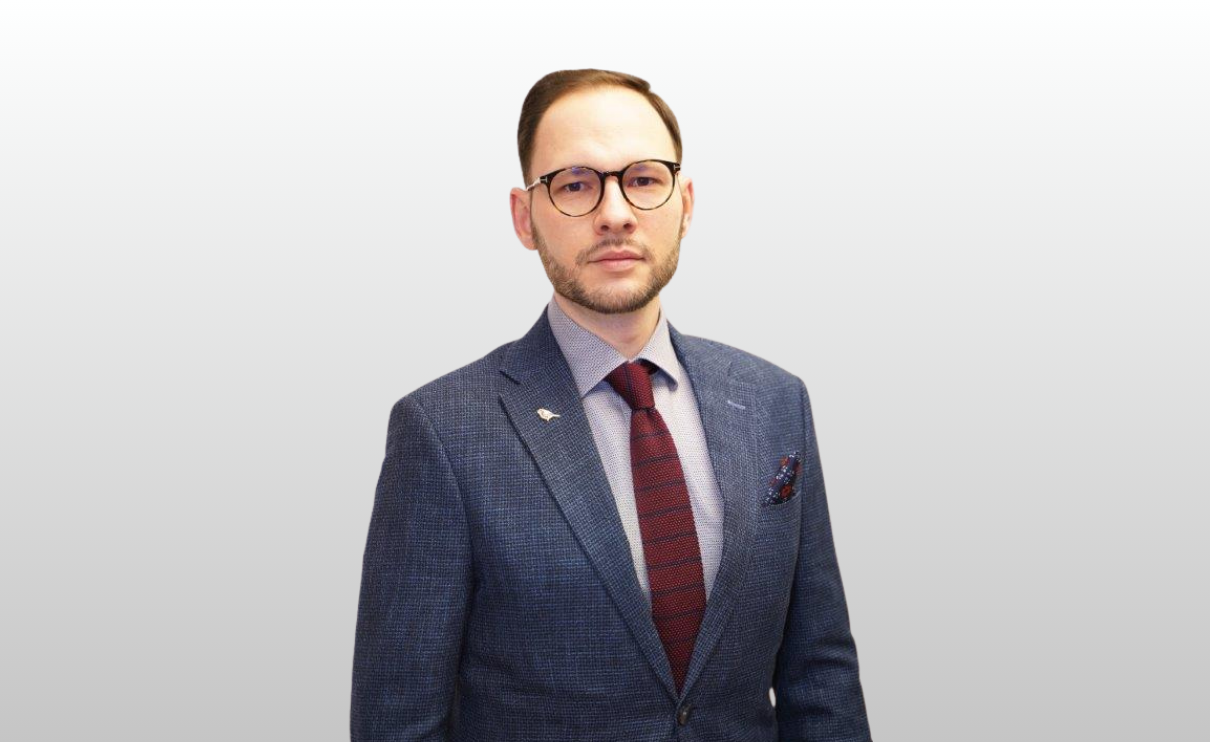
We invite you to read the interview conducted by Anna Błażejewska with Mateusz Gil, PhD(Eng)
Interview with Dr Matesusz Gil – Assistant Professor in the Department of Navigation at the Faculty of Navigation
A.B.: What does the opportunity to carry out the MARINERS project mean to you?
I hope that delivering this project will help develop strong, interesting solutions that can be put into practice, and will allow me to gain experience in managing both the team and the project itself.
A.B.: You’ve been involved in a lot of externally funded scientific research projects. Can you name some of the projects you’ve worked on and the role you played in their delivery?
I’ve had the pleasure of working on several externally funded projects, including: BALTIMARI, FLARE, CADMUSS, ENDURE and ASTRA. For the vast majority of projects, I was simply a regular team member – one of many in research groups. In the ATSTA project, delivered between 2023 and 2026 by an international consortium, I also serve as the partner-side project lead and represent GMU on the steering committee.
It’s difficult to say whether my project experience is extensive or limited, but I feel it’s appropriate for the stage I’m currently at in my professional development.
A.B.: Does the experience you’ve gained so far help you in your involvement in the MARINERS project?
I’d like to think so, yes. What will be new, of course, is the whole expanded layer of administration, reporting and documentation, but in this respect I’m counting on the support of the Technology Transfer Office, which oversees the project on behalf of GMU.
A.B.: Can we already say that the research results developed during these projects are contributing to improved safety in maritime transport?
Not all R&D project outcomes are immediately measurable, so it’s very difficult to respond to that statement directly. Of course, I’d like that to be the case, because improving safety in navigation and maritime transport, among other areas, also indirectly enhances everyone’s quality of life, for example, by strengthening the resilience of the global supply chains we all rely on every day. What is certain, however, is that each of the projects I’ve worked on so far, although focused on slightly different issues, has been thematically connected to maritime transport safety.
A.B.: What are the key areas and goals of your research?
Broadly speaking, my work focuses on maritime transport safety, or navigation safety more generally. I’m particularly interested in ship collision avoidance and the associated methods of risk analysis, as well as the introduction of unmanned and autonomous vessels into operational use – especially with regard to their safety systems.
A.B.: In 2022, you received an award from the Gdańsk Branch of the Polish Academy of Sciences in the young researchers’ competition for the best creative work published in 2021 in technical sciences, for your article ‘A concept of critical safety area applicable for an obstacle-avoidance process for manned and autonomous ships’, published in Reliability Engineering and System Safety (140 points on the Ministry of Education and Science list). The paper concerned improving the concept of the dynamic critical manoeuvring area (CADCA) in a collision scenario involving a ship and a stationary obstacle.
That award mattered to me because it reassured me that my research was heading in the right direction – especially as the concept of the critical area described in the article later became the basis for my doctoral work.
A.B.: Your output includes many research papers published in prestigious scientific journals, such as ‘IEEE Journal of Oceanic Engineering’; ‘Ocean Engineering’; ‘Reliability Engineering and System Safety”; ‘Safety Science’; ‘Journal of Cleaner Production’;‘Marine Policy’; ‘Maritime Economics & Logistics’; ‘Maritime Policy & Management’; ‘Marine Pollution Bulletin’. You’ve also written many reviews of papers for well-known journals. Do you have your own method for achieving publication success?
There’s nothing unusual about it. I simply try to submit papers I’ve authored or co-authored to the journals I read myself and draw on in my research. If a given journal features work by researchers whose achievements I follow and who inspire me, I also try to get published in that same publication.
Publishing your research in journals like these is a long, labour-intensive and painstaking process, so it would probably be easier to aim lower and choose different publication targets. However, I believe that if you’re investing in long-term rather than short-term outcomes, it’s worth taking a more demanding path. Anyone can submit a manuscript to the journals you mentioned and try their hand without any financial cost, because fees apply only to the open-access option, which is not compulsory.
As for ‘publishing success’ – I’m very, very far from considering my current output a success. I’d rather respond to that question at the end of my journey than at the beginning of my professional path.
A.B.: Your path to academic work at Gdynia Maritime University began with an engineering degree in Navigation (specialisation: maritime transport), followed by a master’s degree in Offshore Technologies, completed in 2015. In 2023, you defended your dissertation entitled ‘A method for determining the dynamic critical manoeuvring area for a seagoing ship in a collision situation’ and were awarded a PhD in engineering and technical sciences, in the discipline of civil engineering, geodesy and transport. What led you to choose this area of study and then to pursue a research-and-teaching career? Didn't you consider a career at sea, on ships?
My choice of GMU – back then, Gdynia Maritime Academy – was much the same as that of dozens of other students at the Faculty of Navigation. Years ago, when I had more free time, I did quite a bit of sailing, both inland and offshore. The idea was simple: if spending time at sea fascinated me and gave me so much enjoyment, it would be great to make a living from it.
After graduating, I was set on working at sea, especially since I had a professional certificate as an officer of the watch. Yes, I had a few spells at sea, but fairly quickly, I became convinced that a multi-month contract on a tanker has little to do with the holiday yacht sailing that used to appeal to me so much. And as other interests began to emerge too, I concluded that perhaps I could stay connected with the sea in line with that original idea, but from a different angle – for example, through research – while remaining on shore day to day.
A.B.: You have taken part in national and international scientific conferences as both an attendee and a speaker. Do face-to-face meetings with other academics help you build contacts and apply successfully for research projects?
Conference presentations, much like journal publications, are essential for professional development, so as time and funding allow, I try to take advantage of opportunities to travel to them. My personal goals when attending conferences are mainly twofold: to present what I’m currently working on and/or to make new contacts or deepen existing ones. And if there’s also a chance to visit an interesting place and experience a new culture, so much the better. Conference presentations – or rather the coffee breaks, dinners and social events around them – definitely help in building connections, including the kind that later make it possible to form a consortium and apply for external project funding. Whether such an application then proves successful and wins the approval of the funding body’s reviewers is a completely different story.
A.B.: In 2019, you completed a three-month research placement at Aalto University, School of Engineering in Finland. This resulted in work within the FLARE project, joint scientific papers and conference presentations with Finnish researchers, as well as long-term collaboration with Aalto University. In your view, what does cooperation with a foreign institution bring?
In terms of tangible outcomes, you’ve essentially listed them all already.We could also mention expanding one’s network of contacts and the opportunity to apply jointly for projects in future consortia. Of course, there are many other benefits that are much harder to quantify – for example, learning a different working culture.
A.B.: Do you believe that a research placement at an overseas university or research institute is a desirable activity for academic staff in their scientific development?
Absolutely – travel broadens the mind, especially if you want it to. It’s worth changing your environment for a while and seeing how similar aspects of work function in another organisation, in another country. On top of that, there’s the chance to experience different cultural approaches, procedures, career paths and professional practices.
A.B.: You’re able to share your knowledge. As part of the project “Local Science Ambassadors at Gdynia Maritime University” (the ‘Social Responsibility of Science II’ programme), focused on science outreach and promotion, you delivered an engaging lecture at the Experyment Science Centre entitled ‘Maritime Industry 4.0 – Shipping of a New Era’. Is it easy to speak clearly and understandably to people without a scientific background?
Thank you for your kind words, although I’d rather say that I’d like to be able to share my knowledge well, because I don’t have much experience in science communication. Through the ‘Local Science Ambassadors’ programme, I developed my skills a little and gained some practical experience, but I’m convinced there’s still a lot of work ahead of me.
The lecture at Experyment was an interesting but challenging task. The topic was the transformation of shipping and maritime navigation over the centuries. tried to explain the development process, present the current state of affairs and technological solutions, and outline for the audience what the near future of maritime transport may look like. The talk was part of the ‘Curious About the World’ series, and the audience were mainly senior citizens, so the biggest challenge for me was probably explaining modern technologies in an accessible way. It’s hard to speak about technical matters in a simple yet engaging way, but the talk was warmly received – so I think it struck a chord.
A.B.: I’d like to return to the beginning of our conversation and the NCBiR funding awarded for the MARINERS project. In your view, what determines such a success? Outstanding talent, systematic and meticulous work?
I think we should talk about success in a few years – when we can assess whether the project’s objectives have been achieved and it has been delivered successfully – rather than immediately after the funding decision, which is, after all, only the very beginning of the project.
In my case, there is no question of any ‘outstanding brilliance’, and there isn’t an ounce of false modesty in saying that. We have outstanding researchers in this country in many fields, and I’m fully aware that I’m simply not one of them. However, it’s worth mentioning one important factor that I think was missing from your question: luck. Alongside the hard work I do every day, I was simply lucky to meet people along my professional path who showed me how to conduct research, how to publish, how to run projects, and how to open myself up to the world. And later, I was lucky to have favourable (though anonymous) reviewers who, when assessing my project proposal, considered it interesting and worthy of public investment.
A.B.: Have you had any difficult moments in your academic work so far – times of frustration or discouragement?
Sometimes I have them several times a day. Unfortunately, that’s the nature of my job. On the research side – submitting large numbers of papers for review or project proposals for evaluation – you can receive an unfavourable response every day, which means that all the work put into preparation, often over many months, comes to nothing, and you have to start again from scratch.
No one gives us that time back. And you can’t always reuse rejected material because of, for example, specific competition rules or changes in the state of the art in a given area. The world doesn’t wait for us: every day, researchers publish something new – often something we applied for last year and are still waiting to hear back about. If the evaluation is negative (which can sometimes also come down to bad luck), we’re not always able to demonstrate the novelty of the proposed solution again, because in the meantime, the literature has expanded, and someone else has already solved the problem using a similar method.
A.B.: What are your plans for your scientific future? What would you like to achieve over the next few years?
To deliver the project entrusted to me, to steadily improve the quality of my publications, and to move towards habilitation.
A.B.: Please tell me about your interests outside of academics? What helps you switch off from scientific work? Do you have any specific goals in those areas, too?
I prefer active ways of spending my free time – running, for instance, which helps clear my head and provides a break from mental work. Unfortunately, at the moment I have very little free time, but I hope that’s only a temporary issue with organising my workload. Besides sport, I also enjoy theatre, good food and good wine – though it’s hard to set ‘targets’ in those areas.
A.B.: How would you encourage students of the Faculty of Navigation to get involved in research activity? Could the example of your own rapidly developing academic career be inspiring for them?
Together with my close colleague Dr Krzysztof Wróbel, we try to encourage students regularly to get involved in research and academic work – of course, with varying results. Still, when we find willing, hard-working individuals, it not infrequently leads to successes in the form of conference presentations and joint publications.
It’s worth adding that recent outcomes of this collaboration with students include publication in reputable journals – highly ranked on the ministerial list and within an Impact Factor – such as Safety Science (doi: 10.1016/j.ssci.2024.106676), Maritime Economics & Logistics (doi: 10.1057/s41278-022-00217-x) and IEEE Access (doi: 10.1109/ACCESS.2022.3174097).
I’m glad you raised this, because people don’t talk much about our students’ publication successes, and we genuinely have a lot to be proud of – these papers gain citations and recognition worldwide. Later, we often send out students (and then graduates) photos from international conferences where someone from the other side of the world cites their work in their presentation.
A.B.: Thank you very much for the conversation. I wish you continued professional and personal success.
Interview by Anna Błażejewska
Dr Mateusz Gil
Assistant Professor in the Department of Navigation at the GMU Faculty of Navigation
Research interests: maritime transport, with a particular focus on: ship operational safety; collision avoidance; the safety of modern transport systems; and the social implications of introducing autonomous vessels and the resulting shift in paradigm within the maritime industry
ORCiD: 0000-0003-1759-1700
https://orcid.org/0000-0003-1759-1700
E-mail: m.gil@wn.umg.edu.pl