Rectors of Gdynia’s Higher Education Centres Debate City’s Future
21.02.2026 | 4 min. czytania
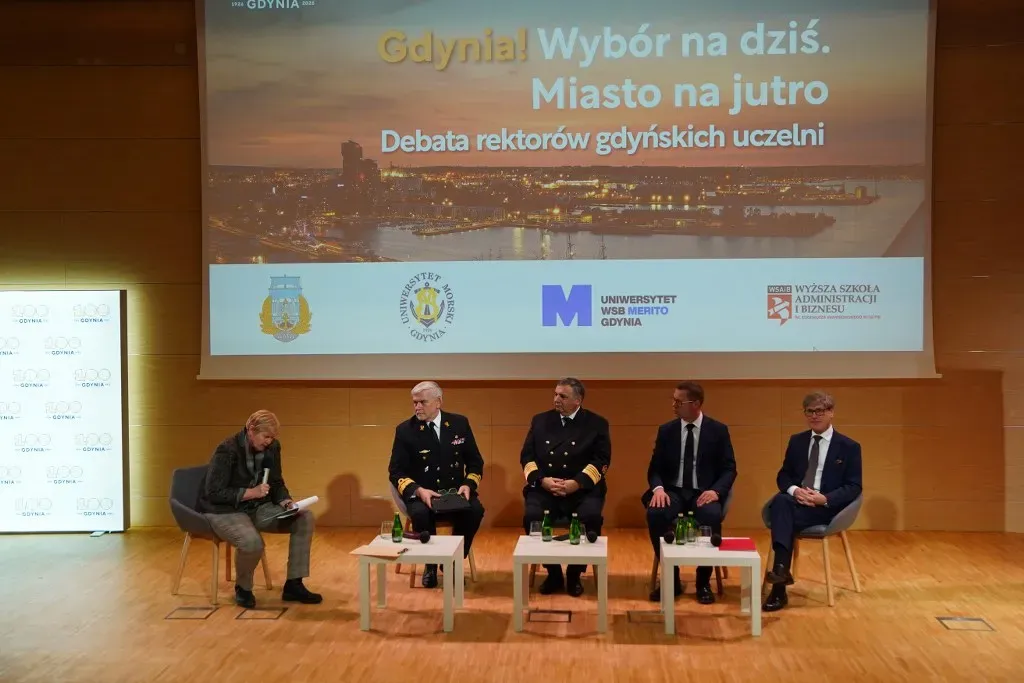
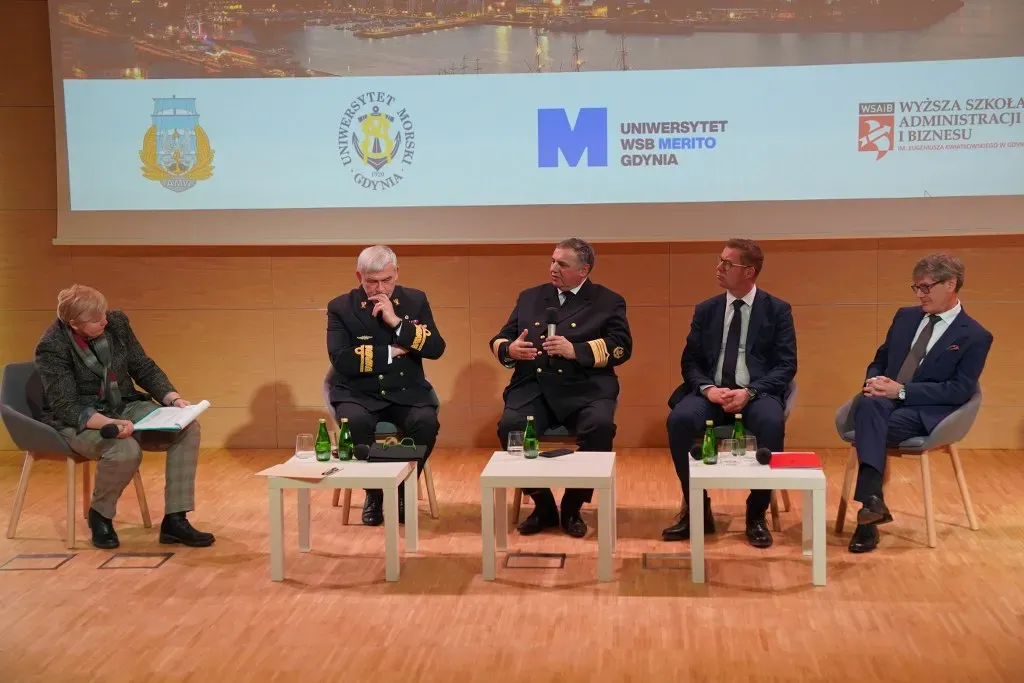
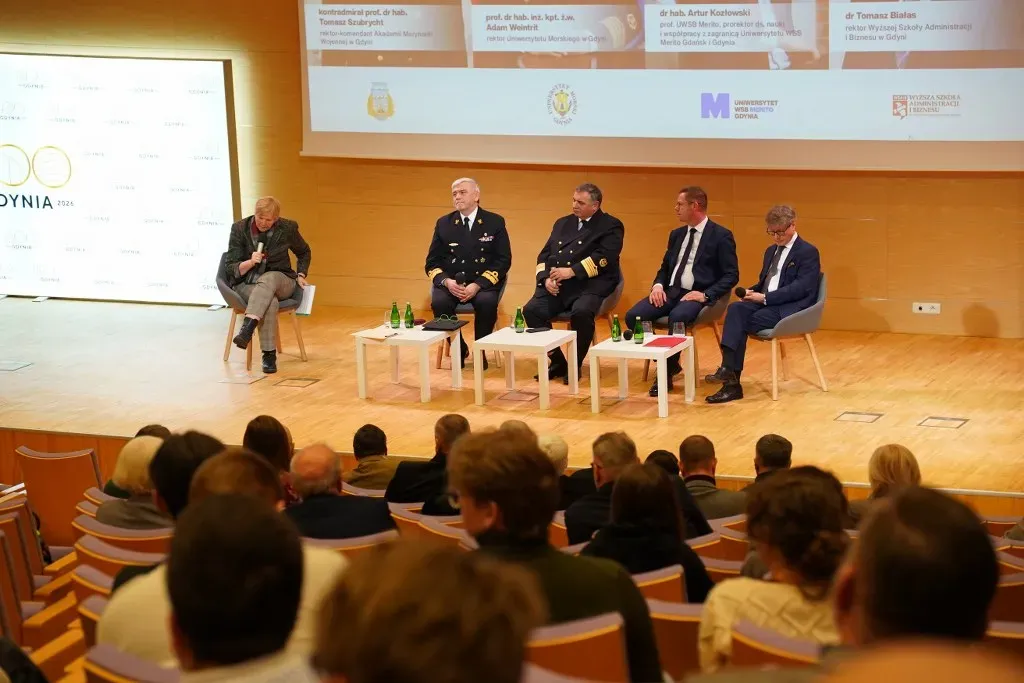
On 19 February 2026, at the Pomerania Science and Technology Park in Gdynia, the rectors of the city’s centres of higher education engaged in debates under the slogan ‘Gdynia – The choice for today. A city for tomorrow.’ The event was organised in cooperation with Gdynia City Council as part of celebrations for the city’s centenary.
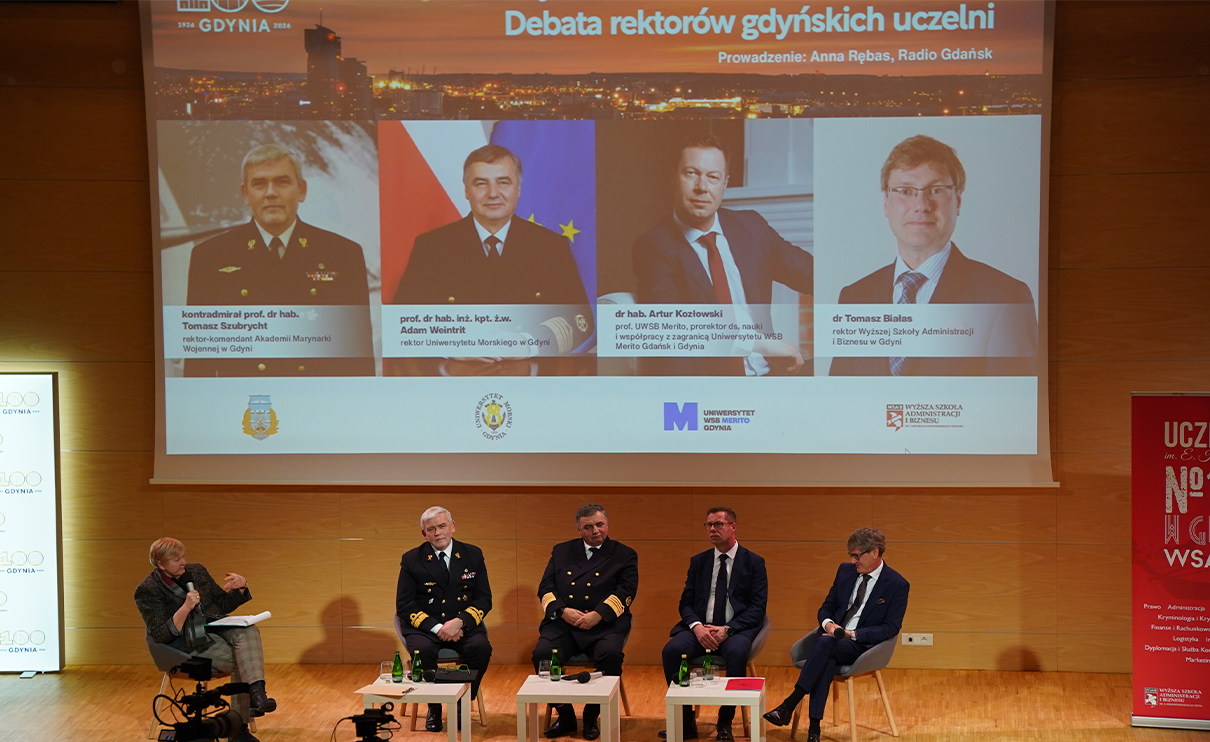
Attending the debate were members of the academic community, local residents, school pupils, and students.
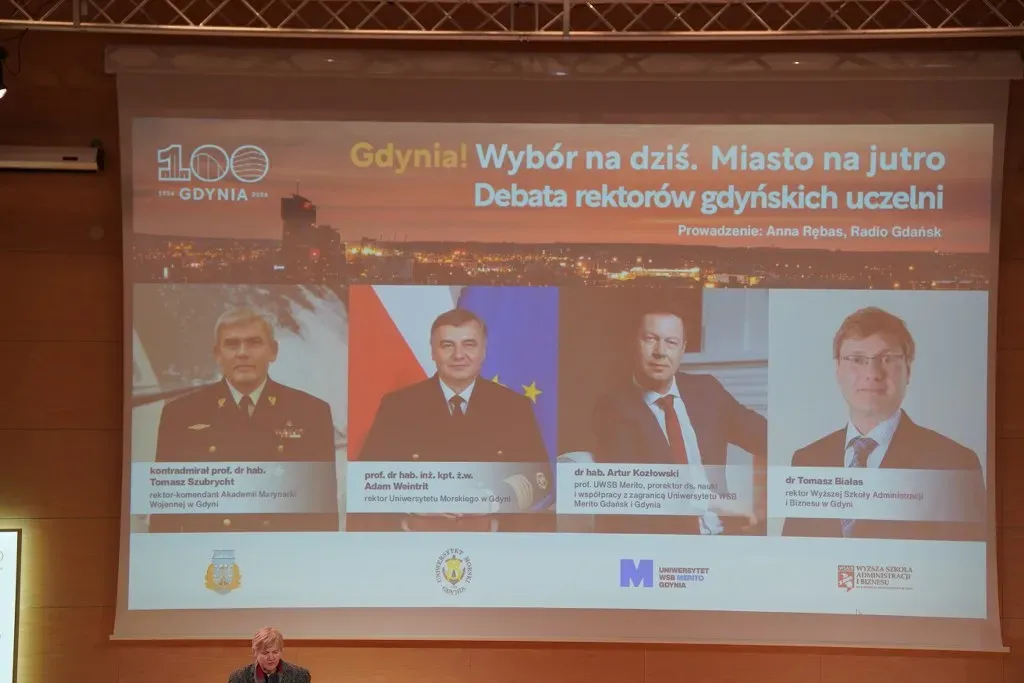
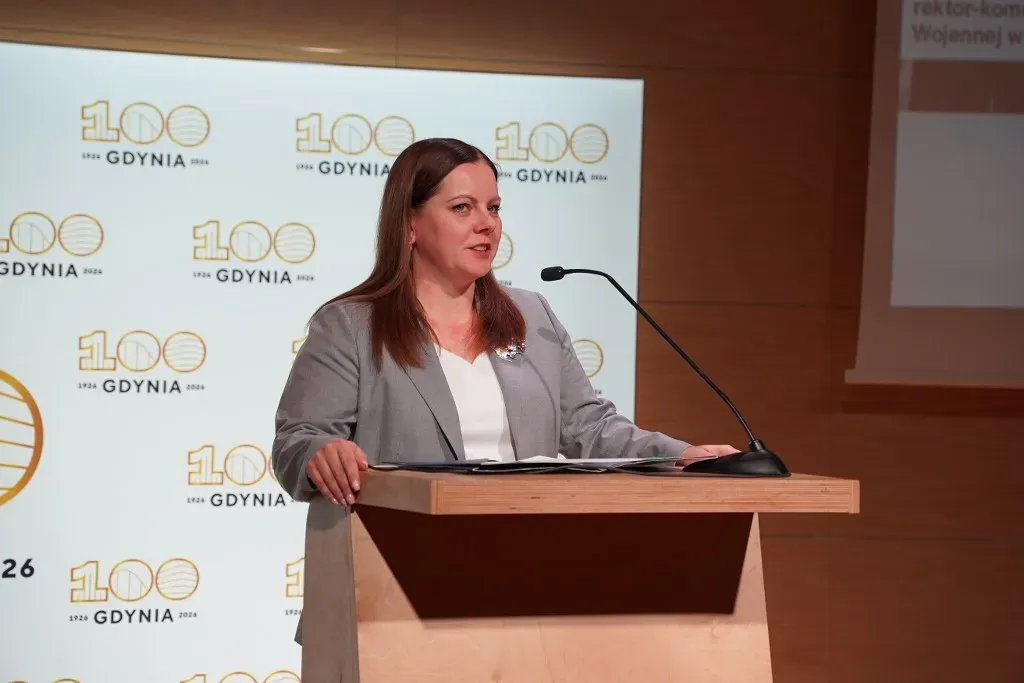
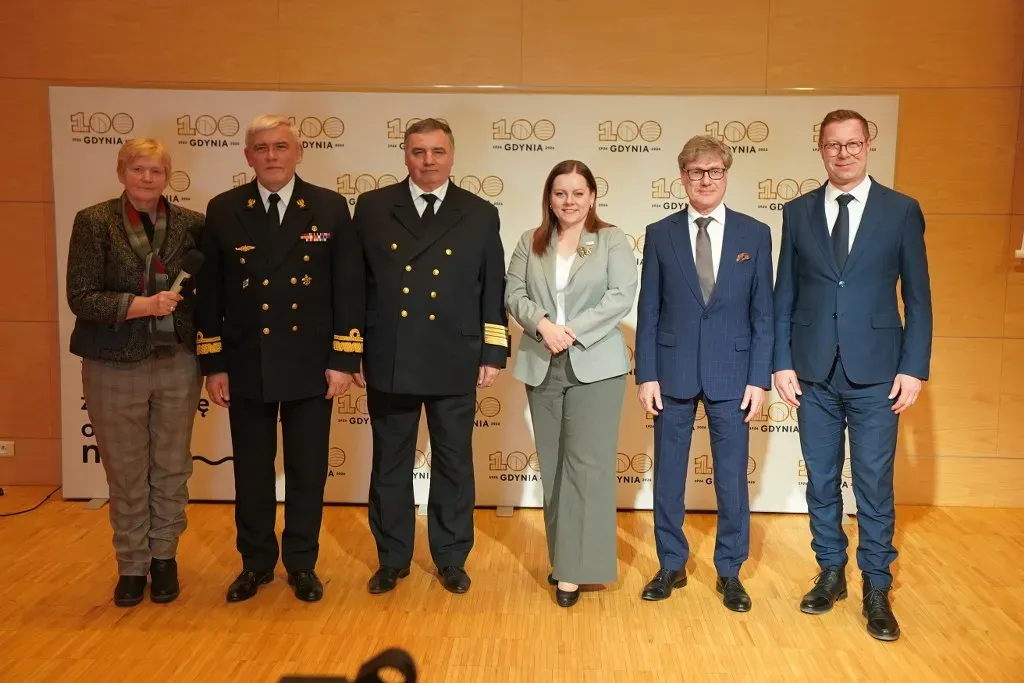
Taking part in the debate, which was opened by the Mayor of Gdynia, Aleksandra Kosiorek, were: HM The Rector of Gdynia Maritime University, Professor Adam Weintrit; Rector-Commander of Polish Naval Academy, Professor Tomasz Szubrycht; the Rector of University of Business and Administration, Dr Tomasz Białas, and the Deputy-Rector for International Cooperation of the WSB Merito University, Dr Artur Kozłowski.
The event was moderated by Radio Gdańsk Reporter Anna Rębas.
In the first thematic block, entitled ‘Gdynia – My City’, the rectors shared personal reflections on Gdynia. They spoke about their relationship with the city and the role Gdynia’s higher education institutions play in social and economic development. During this part of the debate, the city’s character as a place shaped by newcomers was noted repeatedly, while stressing that it is often graduates of Gdynia’s universities who decide to stay in Gdynia.
HM The Rector, Professor Adam Weintrit, emphasised that, in his case, the decision to forge ties with Gdynia was linked to his choice of University — the Higher Maritime School:
For me, it was never a question of whether I would come here to study — it was a question of when. […] I was an Olympiad finalist and had the opportunity to choose any university in the country — any of them. And I chose the Higher Maritime School in Gdynia.
The second part of the debate, entitled ‘Gdynia in the Face of a Changing World’, was dedicated to the challenges of the modern day. The debate highlighted questions of safety, innovation, and development of the blue economy, among others, in the context of the challenges in connection with the dynamically changing geopolitical situation. The Rectors indicated the need for close cooperation between science and business and public administration, as well as the significance of educating personnel who meet the changing needs of the labour market.
In this part of the debate, Professor Adam Weintrit placed particular emphasis – within the broader context of security in its widest sense – on Gdynia Maritime University’s involvement in the work of the IMO (International Maritime Organization):
In English, there are two terms for the Polish word ‘bezpieczeństwo’: ‘safety’ and ‘security’. When we speak of ‘safety’, we understand it somewhat differently – not in terms of military security, but as safety at sea. […] In London, there is the headquarters of the IMO, a UN agency, which is responsible for developing global legislation in connection with safety at sea – and we [Gdynia Maritime University] help to create that legislation. Next week, I will be taking part in a session in London on the training of seafarers, where new safety-related issues will be incorporated into international law, and our University is actively involved in this.
In the third part of the debate, entitled ‘Gdynia – the Next 100 Years’, the rectors discussed the future of the city. They debated the directions of development of the city during the coming decades, providing analysis on both the city’s potential and possible areas of concern. Discussions pointed to the need for investment in security and the further development of the blue economy, all in reference to the city’s maritime character and the challenges that come with it.
In this part of the debate, HM The Rector of GMU, Professor Adam Weintrit, highlighted that Gdynia’s maritime higher education institutions are doing extremely well in the face of both local and global challenges, something which has gained recognition both at home and abroad. This is reflected in the world rankings of maritime universities, in addition to the demand for GMU graduates among employers:
Our maritime centres of higher education are at the top of the world rankings. For over a decade, Gdynia Maritime University has been ranked among the world’s top five maritime universities […]. Our graduates begin their careers at leading shipping companies.
The debate concluded with a short discussion with the audience, during which participants and attendees reached the conclusion that Gdynia’s future lies in the hands of everyone who has any connection with the city.
The rectors’ debate inaugurated a series of lectures planned for the entire jubilee year of 2026, delivered by lecturers from Gdynia’s higher education institutions (GMU/Naval Academy/Merito/UBA). The lectures will be held at these academic institutions every Thursday of the month (from 5 March to 3 December 2026) at 18:00.