
Dr. Yohei Sasakawa: A Short Biography
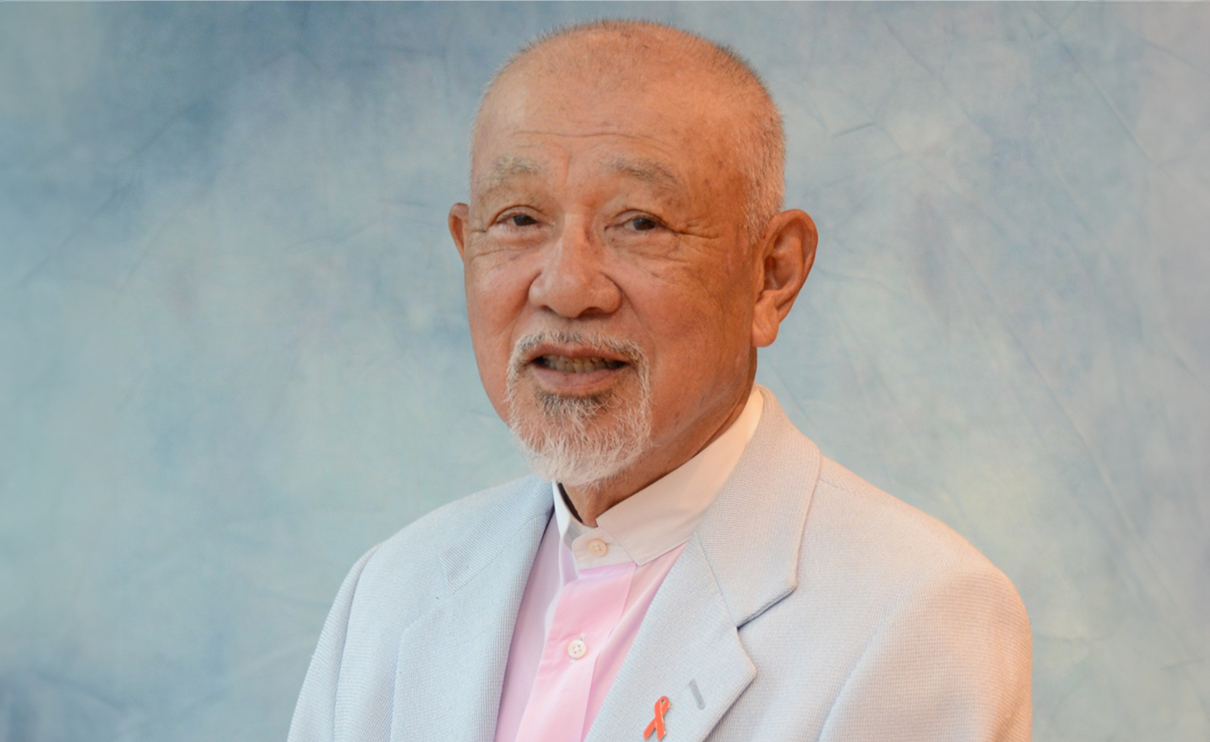
Dr. Yohei Sasakawa was born in Tokyo, Japan, on 8 January 1939. He graduated from the School of Political and Economic Sciences at Meiji University. Before dedicating his life to philanthropy, he was connected with business and the blue economy. For 20 years, he held the post of Director of the Japanese Foundation for the Development of Ship Building (currently the Ocean Policy Research Institute).
He served as President of The Nippon Foundation – the largest charitable foundation in Japan – from 1989 to 2005, and as Chair from 2005 to 2025. Since June 2025, he has held the position of the Foundation’s Honorary Chair, while remaining active in the areas of his previous work.
Among the most important activities of Dr. Sasakawa is his work on maritime safety and the protection of the oceans. This is conducted through close cooperation with the International Association of Maritime Universities (IAMU), of which he served as Honorary Chair from 2005 until 2025. In addition, his work in philanthropy has focused particularly on helping those affected by leprosy.
Dr. Sasakawa continues to collaborate with entities from the political, governmental, academic, and private sectors, undertaking initiatives aimed at solving issues in areas such as health, education, food security, and maritime safety.
In his foreword to the commemorative publication, HM The Rector of GMU states:
Dr. Yohei Sasakawa is a figure of exceptional authority, combining a vision of responsible leadership with tangible action undertaken in the service of peace, sustainable development, and cooperation among nations. His activities, carried out through The Nippon Foundation, have for decades contributed to the advancement of maritime education, the protection of the ocean environment, maritime safety and security, and the building of bridges of understanding between the cultures of the East and the West.
Main Initiatives Undertaken by Dr. Sasakawa in Maritime Safety and the Protection of the Oceans.
Since 1988, in cooperation with the UN, international organizations, research institutes and universities, under the leadership of Dr. Yohei Sasakawa, The Nippon Foundation has created development programmes aimed at producing experts for interdisciplinary, international teams.
The main focus of programmes conducted by The Nippon Foundation is the education of a new generation of experts – leaders involved in the comprehensive protection of oceans, which recognise not only the complexity of the phenomena they study, but also their global nature. As Japan’s largest charitable foundation, The Nippon Foundation has also set itself the goal of making Japan – surrounded by seas and oceans – a model for other maritime nations. With a strong focus on keeping these waters clean, it runs projects to raise awareness among local communities, especially young people, about the importance for the entire ecosystem of regularly removing debris from seas and oceans.
Particularly noteworthy initiatives include:
The Setouchi Oceans X project – launched in 2020 by The Nippon Foundation and local authorities, with the aim of making the Seto Inland Sea the most beautiful of its kind in the world.
Back to Blue – a joint project of The Nippon Foundation and Economist Impact, launched in 2021, focused on issues such as plastic and chemical pollution and ocean acidification. In addition to research, the project also organised international conferences and workshops, during which participants actively sought solutions to the most pressing issues.
The Nippon Foundation, chaired by Dr. Yohei Sasakawa for two decades, is also the main sponsor supporting the statutory activity of IAMU, through the award of research grants and more. A member of IAMU since 2000, Gdynia Maritime University has carried out a range of research projects funded by grants from The Nippon Foundation.
The Nippon Foundation also supports activities carried out through the World Maritime University (WMU), a university founded in 1983 in Malmö, Sweden, on the initiative of the International Maritime Organization (IMO), of which Gdynia Maritime University is also a member.
The Nippon Foundation conducts initiatives in ocean science, maritime innovation and safety, and the sustainable blue economy, including:
Project Seabed 2030 – a flagship programme of the UN Decade of Ocean Science for Sustainable Development – is the result of a meeting in 2015 between The Nippon Foundation and the General Bathymetric Chart of the Oceans (GEBCO) programme, run under the joint auspices of the International Hydrographic Organization (IHO) and UNESCO’s Intergovernmental Oceanographic Commission (IOC). At that time, only 6% of the seabed had been graphically represented on a specialised map; nevertheless, it had already become vital to fully map approximately 70% of the blue surface of our planet.
The Nippon Foundation–GEBCO Seabed 2030 Project aims to map the entire ocean floor by 2030.
Nekton Ocean Census is a global initiative aimed at discovering unknown marine life. Launched jointly by The Nippon Foundation and the Nekton Foundation, the initiative is based on collaboration between the scientific community, media, academia, business, and the private sector.
MEGURI2040 Fully Autonomous Ship Program – conducted in connection with issues related to the ageing population and shortage of human resources in Japan, and the need to minimize maritime accidents, 70-80% of which are caused by human error. Within the project, The Nippon Foundation is taking steps to implement fully autonomous shipping in Japan. This initiative aims not only to solve social problems in the country but also to revitalize and increase the competitiveness of the maritime industry and related sectors.
Ocean Innovation Consortium – established by The Nippon Foundation with cooperation from the Japanese government, the Ocean Innovation Consortium is a nationwide platform bringing together universities, public institutions and companies to address Japan’s shortage of engineers with practical expertise in marine resource and offshore development, with the goal of increasing the number of Japan’s marine resource development engineers to 10,000 by 2030.
In recognition of his contribution to maritime safety and work for the protection of the oceans, in 2014, Dr. Yohei Sasakawa was honored with the International Maritime Award.